Ethiopia National ID (Fayda) Photo: Official Size & Requirements
Get a perfectly compliant 30×40 mm portrait for Ethiopia's Fayda biometric national ID — instantly cropped to the exact official standard.
This photo must be taken by an accredited service
For this document, Ethiopia does not accept a self-prepared photo. By law it must be captured on site by an authorised service and submitted electronically, so we cannot produce a submittable file for it. The official specification is shown below so you know exactly what to expect at your appointment.
This photo is captured on site — but we can make your Ethiopia photos online:
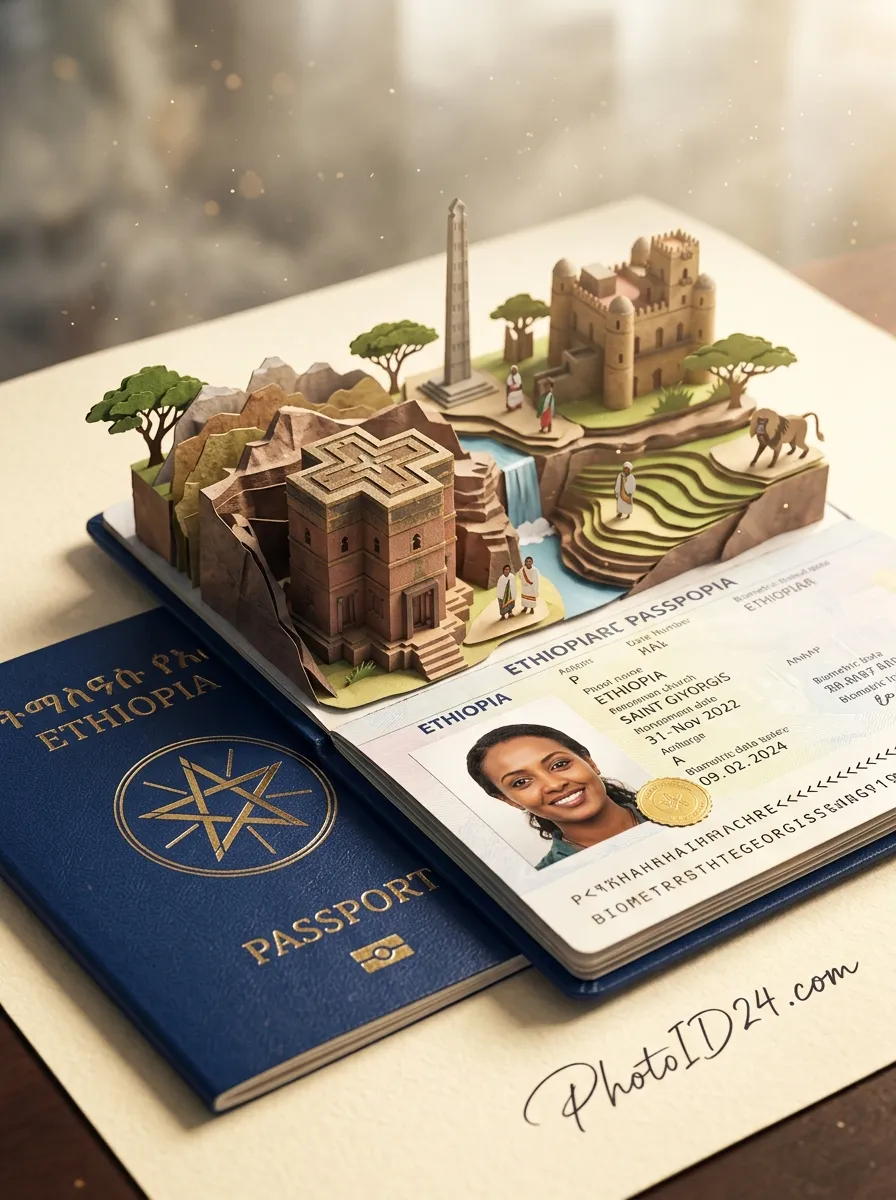
A document photo is a headache of its own
A Ethiopia National ID card photo has strict requirements, and a mistake costs time and money. We’ll show you how to pass on the first try.
It gets rejected
Wrong size, background or cropping — and the system returns the application.
Expensive and slow
A trip to a photo studio means a queue, time and €7–12 for a reshoot.
Confusing requirements
Exact size, head height, light background, facial expression — easy to get wrong.
Redo it all over
Rejected — take another photo, pay and submit again. Round and round.
«Below are the exact requirements from the official source, so you arrive at your appointment prepared.»
Ordinary photo → ready for submission
We remove the background and clutter, set the framing and lighting — keeping your face without «beautifying».
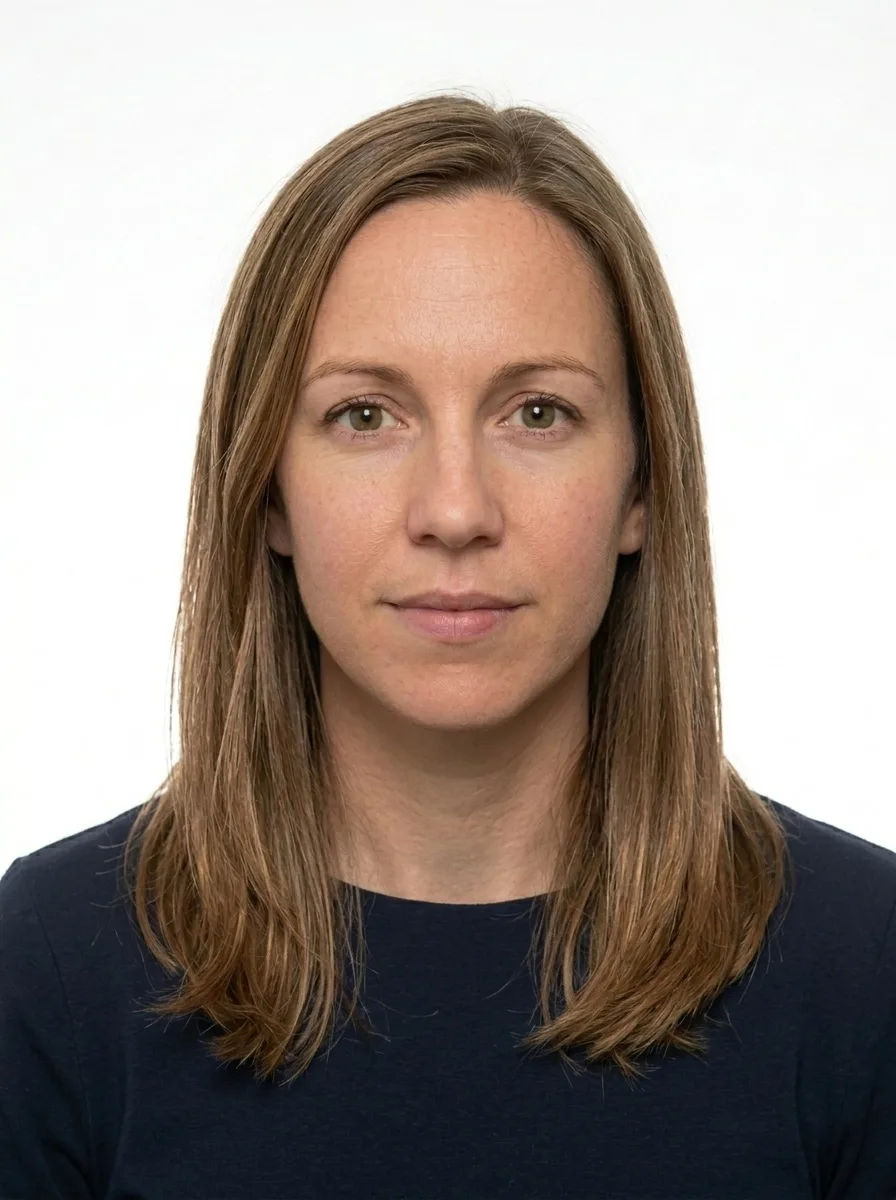
Your face stays yours — we do not change features, only the background, lighting and framing.
Your National ID card photo: what matters
A compliant portrait for Ethiopia's Fayda National ID card must meet ICAO-style biometric standards set by the Ethiopian National ID Program (NIDP). Getting the dimensions, background, and pose exactly right ensures the enrollment officer can process your biometric record without delay.
Ethiopia's national identity document is the Fayda — a fully digital biometric ID introduced under the NIDP. Unlike many countries where applicants submit a printed photograph, the Fayda system captures your portrait digitally on-site at a certified enrollment centre, together with your fingerprints and iris scans. The 30×40 mm dimensions you see quoted are the nominal ICAO-equivalent values that define the face geometry and framing the on-site camera operator must achieve. Knowing these standards before your appointment means you can walk in confident about exactly how to pose and what to avoid.
- Photo size: 30 × 40 mm (709 × 945 px at 600 dpi)
- Background: plain white (#FFFFFF) — no shadows, no gradients
- Face coverage: face height must fill 70–80 % of the total frame height
- Expression: neutral, relaxed — mouth closed, no smile
- Eyes: open, clearly visible, looking directly at the camera
- Glasses: not permitted under any circumstances
- Headwear: allowed only for verified religious reasons; the full face — forehead to chin, ear to ear — must remain fully visible
- Recency: the reference image should reflect your current appearance
Common reasons biometric enrollment portraits are rejected in Ethiopia:
- Glasses worn during capture — even thin frames or tinted lenses are rejected; remove them entirely before approaching the camera
- Headwear that obscures facial features — a hijab or head-covering accepted for religious reasons must not shadow the forehead, eyes, or jawline
- Non-white or patterned background — colored walls, fabric, or any visible texture behind the subject will cause a retake
- Face proportion outside the 70–80 % range — standing too far from the camera (face too small) or too close (top of head cropped) are the most frequent framing errors
Our tool automatically crops and adjusts your uploaded photo to the exact 709 × 945 px / 30 × 40 mm Fayda-standard frame, so you arrive at the enrollment centre already knowing what a fully compliant portrait looks like — and you leave with a ready-to-use digital file for any other document or visa application that does accept submitted photos. Try the free watermarked preview before downloading the full-resolution result.
What an accepted National ID card photo looks like
Ethiopia · 30 × 40 mm. Tap any requirement to see what it means on a real photo.
- Size
- 30 × 40 mm · 709 × 945 px
- Background
- White plain
- Head in frame
- 70–80%
- Glasses
- Not allowed
- Facial expression
- Neutral, mouth closed
- Headwear
- Only for religious reasons
- File
- JPG · ≤ 240 KB
Print size is 30 × 40 mm and the digital file is 709 × 945 px.
Requirements verified: 09.2026
How to take a good photo
The most common reasons a Ethiopia National ID card photo gets rejected — and how to avoid them. Compare good and bad shots.

1Format and freshness
A color photo taken no more than 6 months ago.

2Lighting and background
Even light with no shadows on the face; a plain light background, without glare.

3Head position
Face head-on, head centered, no tilt or turn.

4Facial expression
Neutral, mouth closed, eyes open and looking at the camera.

5Glasses and accessories
No glasses (especially sunglasses); eyes fully visible, without glare.

6Headwear
Only for religious reasons and not covering the face — the face fully visible.

7Clothing
Ordinary everyday clothes; no uniforms or face-covering clothing.
Common questions about Ethiopia National ID card photos
What is the correct photo size for the Ethiopia Fayda National ID?
How is the photo taken for the Fayda biometric ID?
Are glasses allowed in the Ethiopia National ID photo?
What background color is required?
Can I wear a headscarf or hijab for the Fayda ID photo?
Why should I prepare a reference photo if the portrait is taken on-site?
Your photo is protected
A photo is personal data, so we handle it carefully and in line with GDPR. We process it only to prepare the document and delete it within clear deadlines.
- Only with consentWe process the photo only after your explicit consent before upload.
- Auto-deletionWe delete the source photo within a day, the ready file after 7 days.
- No sharing with third partiesYour photos are not sold or used to train any third-party systems.
- Deletion on requestYou can ask to delete your data at any time — with a single request.