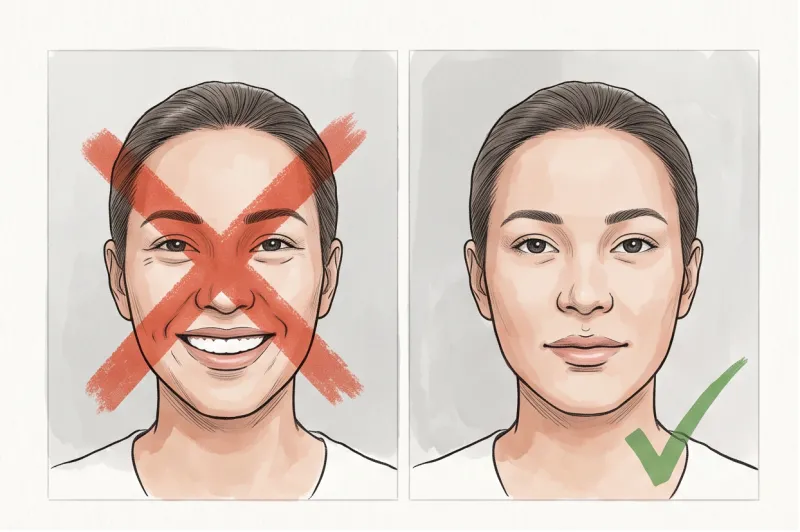
Can You Smile in a Passport Photo? The Short Answer
In short: no, you cannot smile in a passport, visa, or official ID photo. Whether you are applying in the United States, the United Kingdom, the European Union, or elsewhere, the universal biometric requirement is a completely neutral expression. Your mouth must be fully closed, your teeth must be hidden, and both eyes must be open and clearly visible to the lens.
If you are wondering about the exact impact of smiling in a passport photo, the outcome is highly predictable. In practice, a non-neutral expression — which almost always takes the form of an instinctual smile or a slight smirk — is the leading cause of photo rejections worldwide. People are naturally conditioned to smile when a camera points at them, but doing so on an official travel document alters your facial geometry and practically guarantees a rejected application.
According to the international guidelines that dictate biometric standards across the globe (ICAO Doc 9303), the face must be presented in a completely standardized way. This means the facial muscles must be relaxed, with the head centered and facing straight ahead. Even slightly parted lips or a subtle grin will trigger an automatic failure when facial recognition software attempts to map your features. For a deeper look at the technical issues that cause applications to fail beyond just facial expressions, you can read our complete guide on why passport photos get rejected (and how to fix it).
Why Is Smiling in a Passport Photo Banned?
Smiling is banned because it temporarily alters your facial proportions, corrupting the data that automated border control systems use to verify your identity. Official document photos are not standard portraits; they are precise pieces of biometric data.
The strict ban on smiling is not an arbitrary choice by individual passport offices. Global biometric photo rules are derived directly from ICAO Doc 9303, the international standard for machine-readable travel documents. This standardized framework ensures that a biometric passport issued in one country can be instantly and accurately verified by e-gates anywhere in the world.
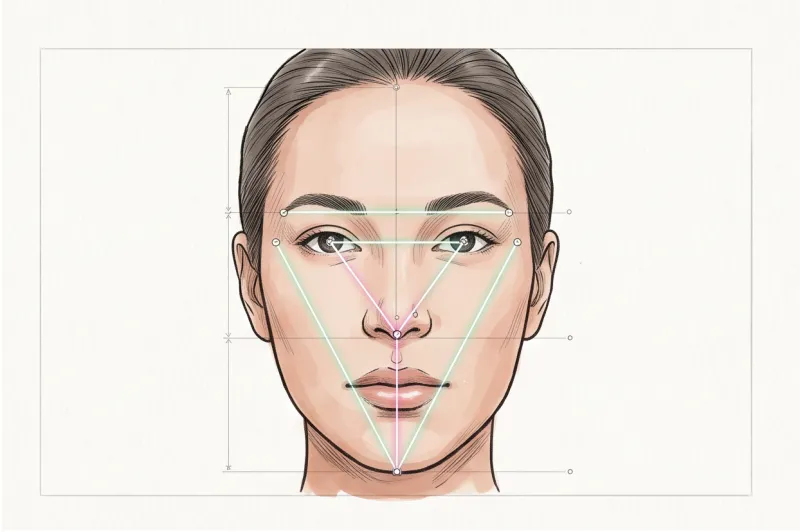
To verify your identity, facial recognition software at border checkpoints maps the exact geometry of your face. The scanners measure specific anchoring points — most critically, the distance between your pupils, the position of your ears, the width of your nose, and the bottom of your chin. For these measurements to be universally reliable, they must be taken from a completely relaxed, baseline state.
When you smile, the muscles in your face physically shift these anchor points. Your cheeks rise, your eyes narrow, and your jawline changes shape. Even a mild smile distorts the distance between your lips and your nose. Because border software compares the live scan of your face against the digitized map stored in your passport's microchip, any structural discrepancy corrupts the biometric matching process and causes automated scanner failures.
In practice, non-neutral expressions and the resulting biometric distortion are among the leading reasons why passport photos get rejected by government authorities during the initial application stage.
Get your document photo in 2 minutes
Upload a normal selfie and receive a compliant document photo that meets the official technical requirements for your country and document — ready to print or submit online.
Make my photoWhat Exactly Qualifies as a 'Neutral Expression'?
A neutral expression simply means that your facial muscles are completely relaxed. It does not mean you have to look angry, hostile, or scowl at the lens — you just need to keep your face entirely expressionless.
To meet the international biometric standards required for official documents, your face must remain in its most natural resting state. When analyzing why passport photos get rejected, forcing an unnatural facial posture is one of the most frequent culprits. An officially compliant neutral expression boils down to three main rules:
- The mouth must be completely closed: Your lips should lightly rest against each other. There can be no parted lips, visible teeth, or clenched jaws, as these movements alter your lower facial geometry.
- Both eyes open and focused: You must look straight ahead at the camera lens. Your eyes should be open normally — neither squinting nor forced wide open in a surprised manner.
- Perfectly centered and level head: Your head posture is just as important as your facial muscles. Your head must be perfectly centered and level in the frame, with square shoulders and absolutely no tilt or rotation in any direction.
Many applicants overthink the ban on smiling and intentionally furrow their eyebrows to look serious. Scowling is a mistake, as it changes the exact biometric distance between your eyes and brow line. The best approach is to take a deep breath, exhale gently so your shoulders drop into a square position, and let your face rest naturally without any active muscle tension.
Exceptions: Can Babies and Toddlers Smile in Passport Photos?
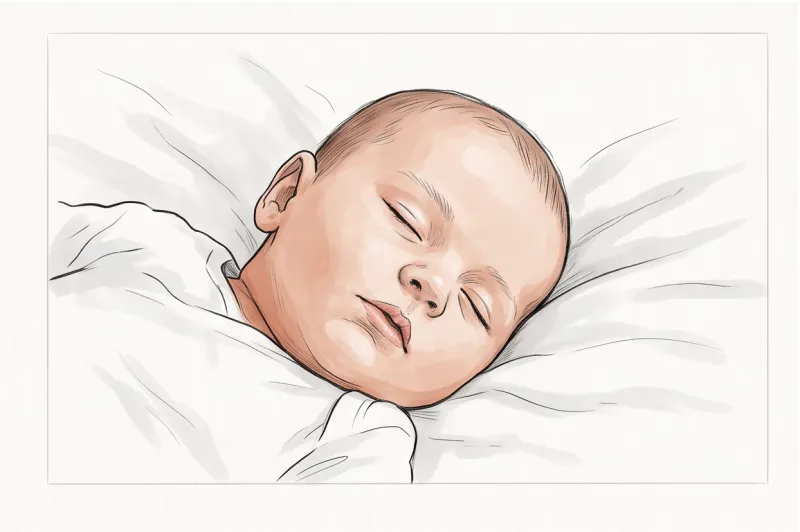
Yes, infants and newborns are the primary exception to the otherwise strict biometric expression rules. Many national passport and immigration authorities relax the mandatory "neutral expression" and "eyes open" requirements for babies under a certain age. They acknowledge that you simply cannot instruct a newborn to stop smiling, close their mouth, or keep both eyes perfectly open on command.
However, this leniency applies only to the child's facial expression. In practice, infant passport photos are frequently rejected because parents assume the relaxed rules apply to the entire image. The photo must still adhere to strict framing standards. It must feature a plain, light uniform background, and it must contain absolutely no other people. A very common rejection cause is a parent's hand or fingers visible supporting the baby's head or shoulders. If you need to support your child, your hands and arms must be hidden completely beneath their clothing or kept entirely out of the frame.
Additionally, keeping the frame clear of objects is non-negotiable. No pacifiers (dummies) are allowed in the mouth, as they obscure essential facial features. Similarly, no toys, patterned blankets, or visible car seat headrests are permitted in the shot. A practical tip for achieving this at home is laying the infant on their back on a plain white or light grey sheet and taking the photo directly from above. This ensures the background is compliant and eliminates the need to hold them up.
Finally, because policies are not standardized globally, you must always check the specific official authority of the destination country for exact age cutoffs regarding infant expressions. While one country's official source might state that children under one year do not need their eyes open, another country might extend expression exemptions up to age five.
Ready to prepare your document photo?
Skip the studio. Upload a selfie and get a professionally prepared photo that meets the official technical requirements in about two minutes.
Get startedCommon Mistakes: The 'Mona Lisa' Smirk and Other Rejection Causes
In practice, a non-neutral expression is the most frequent reason a document photo is rejected. Even subtle micro-expressions that you might not consider a full smile will alter your facial geometry, causing automated border control scanners to fail. Avoid these common pitfalls to ensure your photo meets official biometric requirements.
- The 'Mona Lisa' Smirk: Many applicants try to look pleasant by keeping their lips sealed but smiling with their cheeks. This smirk raises the cheekbones and naturally narrows the eyes. Because universal biometric principles require both eyes to be fully open and clearly visible, a smirk is consistently rejected.
- The Frown: When instructed not to smile, some people overcompensate by deliberately scowling or staring intensely. Knitting your eyebrows pulls the skin tight and alters the measurable spacing across your forehead and between your eyes.
- The Open Mouth: Even if your face is otherwise expressionless, slightly parted lips will cause a rejection. This frequently happens unconsciously when applicants breathe through their mouths right as the camera shutter clicks. Your lips must be relaxed but completely closed.
- Raised Eyebrows: In an effort to ensure their eyes are fully visible, some applicants force their eyes open much wider than natural. Raised eyebrows stretch the facial muscles and distort the biometric map just as much as squinting does.
Beyond facial expressions, overlapping physical items frequently ruin otherwise perfect shots. Your hair must be pushed back so it does not cast shadows or obscure your eyes and the outer outline of your face. Furthermore, you should remove your glasses before taking the photo. Due to persistent issues with lens glare, reflections, and frames blocking the eyes, many authorities — including the United States Department of State and most European Union authorities — now ban glasses in passport and ID photos entirely. Unless you hold a specific, documented medical exception that your destination country permits, taking your glasses off is the only guaranteed way to avoid this specific rejection.
How to Get a Compliant Passport Photo (Without Looking Angry)
The secret to achieving a compliant document photo that does not look like a mugshot is physical relaxation. To achieve a relaxed neutral expression, close your eyes, take a deep breath, and open them naturally just before the photo is taken. This simple technique drops your shoulders squarely, releases tension in your jaw, and smooths out a furrowed brow. You satisfy the strict biometric rule of a closed mouth and open eyes, while maintaining a pleasant, approachable appearance rather than an angry scowl.
Lighting plays a critical role in how your expression is captured by the camera. You must ensure perfectly even lighting to avoid shadows around the mouth that might mimic a frown or smirk. Harsh overhead room lights often cast deep shadows under the eyes and nose, which automated biometric scanners can misinterpret as non-neutral facial features. Stand facing a window that provides indirect, natural daylight. This illuminates your entire face evenly and helps you naturally avoid the dreaded red-eye effect. Ensure you are standing against a plain, light uniform background — such as a white or light grey wall — and step slightly forward to eliminate any shadows behind your head.
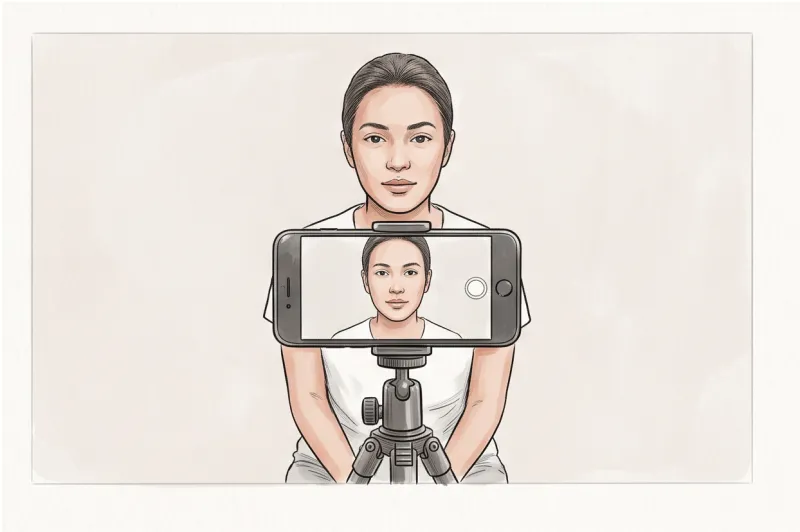
Standing in a busy retail line often creates anxiety, leading to a stiff posture and a tense face. Taking the photo at home allows for multiple attempts without the pressure of a pharmacy line. You can take as many shots as you need to get your head perfectly centred, your eyes level, and your expression entirely neutral.
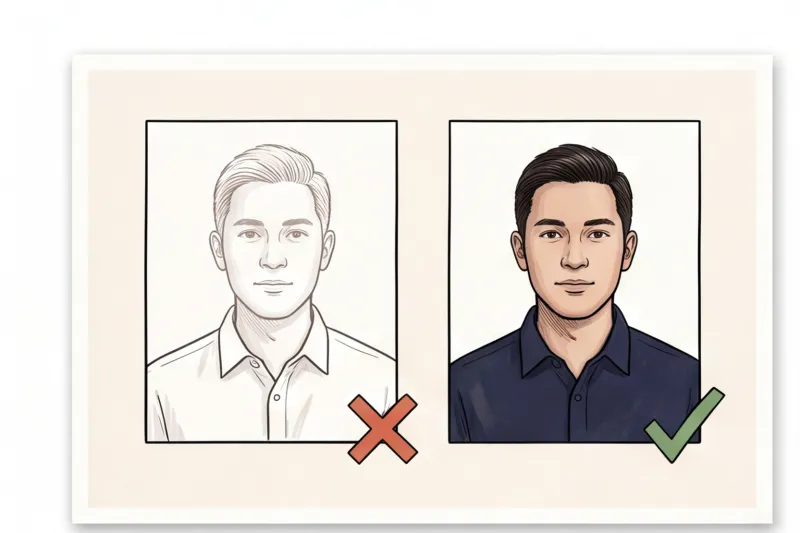
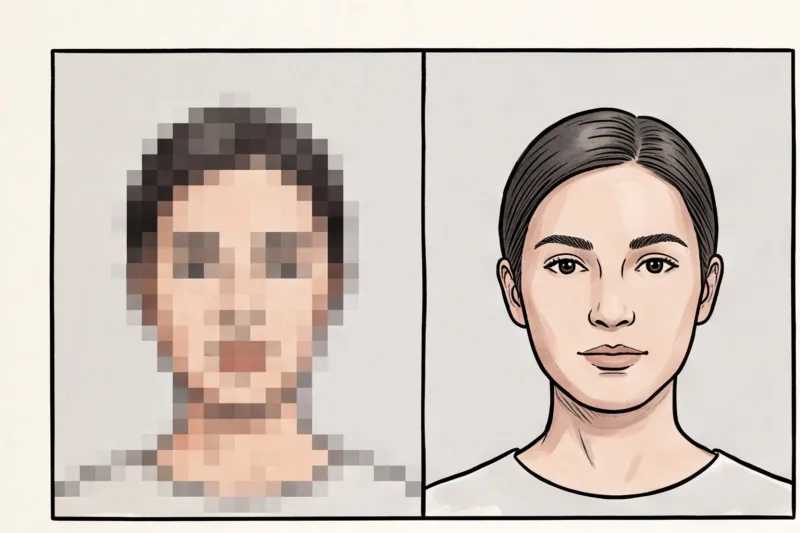
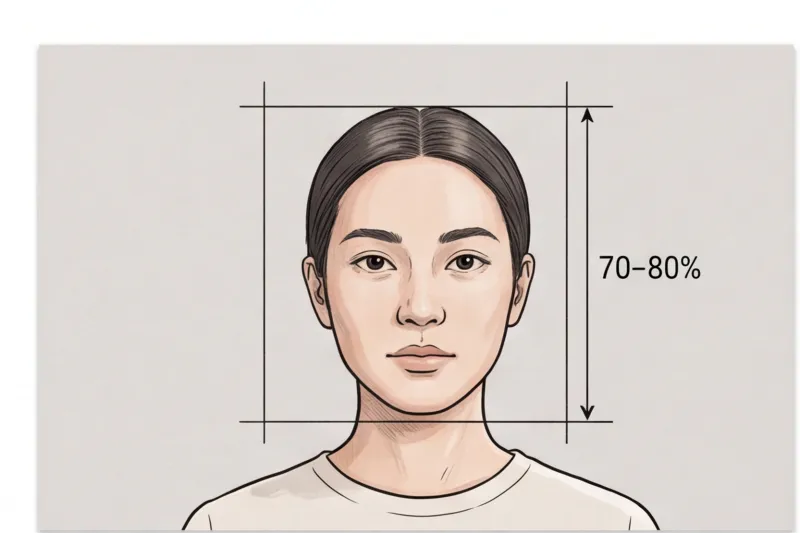
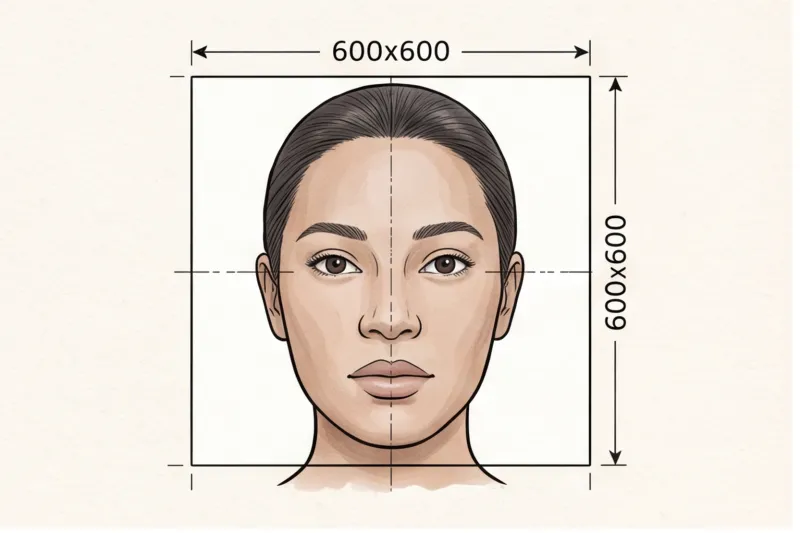
Once you capture the right shot, it must be sized accurately. If you are taking the photo yourself, you can have PhotoID24 crop and format the image to the correct dimensions automatically. Sizing rules vary strictly by country. For example, you will need a 2x2 inch (51x51 mm) format for a United States passport, whereas a 35x45 mm size is the standard across most of Europe, the UK, and Australia. When doing it yourself, you must also manually ensure your face fills roughly 70 to 80 percent of the frame height, as mandated by most biometric standards.
For a guaranteed professional result that removes the stress of manual cropping and background adjustments, use our premium service at PhotoID24. Simply upload your relaxed selfie, and it will be checked against the official rules and prepared in minutes. Our platform automatically sizes your image, verifies the head-height ratio, and replaces your background with the exact plain, light color required by your destination country's official authority. You receive a final image that meets the official technical requirements, ready to print or submit online.
Get your document photo in 2 minutes
Upload a normal selfie and receive a compliant document photo that meets the official technical requirements for your country and document — ready to print or submit online.
Make my photoThe next time you need an official document, skip the stressful photo booth. Focus entirely on relaxing your face, take your photo in good window light, and let a specialized professional service handle the complicated biometric cropping and formatting.