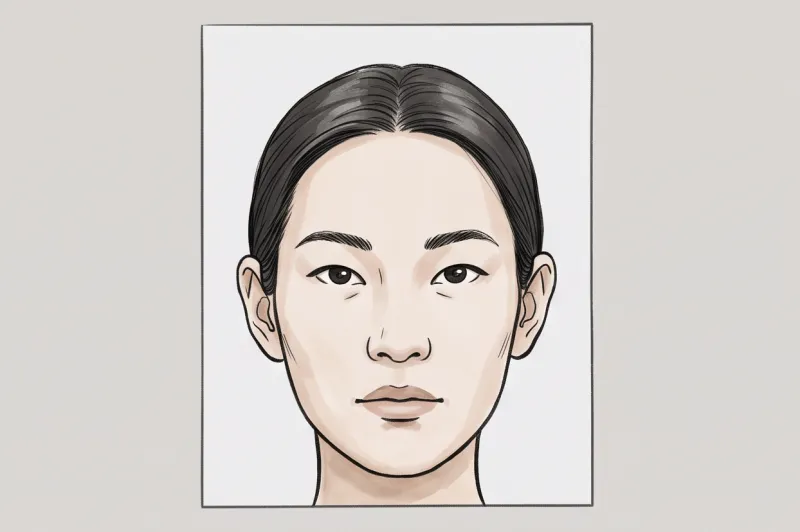
What Are the Rules for Hair in a Passport Photo?
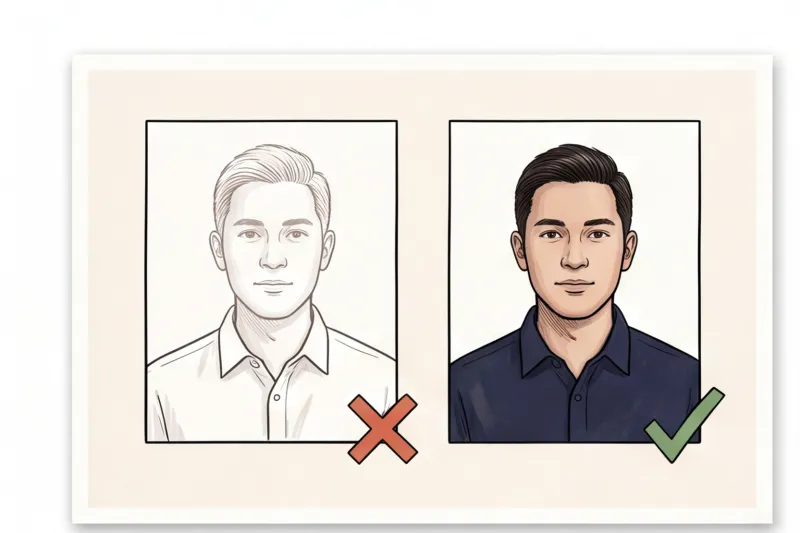
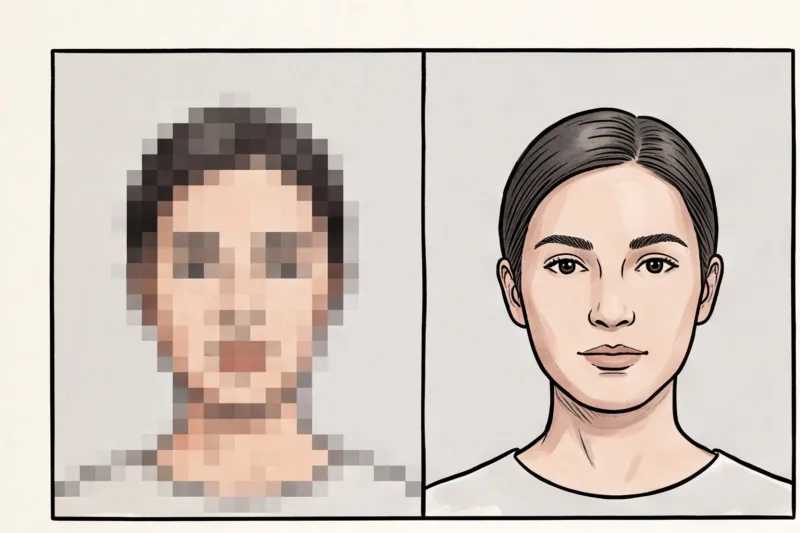
If there is one fundamental rule for a hair passport photo, it is that your hairstyle cannot hide any part of your facial geometry. To meet official biometric requirements, the entire outline of your face — from the bottom of your chin to the top of your forehead — must be completely visible to the camera.
Modern border control systems rely on biometric scanners that map the fixed distances between your features. Under the international ICAO Doc 9303 standards, this facial geometry must remain totally unobstructed for machine readability. If hair falls across your eyes, covers your eyebrows, or drapes over the sides of your face, the software cannot accurately verify your identity, resulting in a rejected application. We cover the full scope of these international specifications in our complete guide.
In practice, the safest approach when preparing for your photo is to simply tuck your hair behind your ears. This instantly clears the edges of your face. You must also ensure that your hairstyle does not cast dark shadows onto your face, your cheeks, or the plain, light background behind you. A heavy fringe or voluminous style that blocks light from reaching your eyes will create uneven lighting, which is a frequent cause for rejection by passport offices.
Finally, your photo must reflect your current appearance. Official authorities require photos to be taken within the last 6 months. If you have dramatically changed your hair color, shaved your head, or adopted a completely new everyday hairstyle since your last document was issued, you will need a recent photo that accurately represents how you look today.
Can I Wear Bangs or a Fringe in My Passport Photo?
Yes, you can wear bangs or a fringe in your passport photo, provided the hair does not cover your eyes or your eyebrows. As detailed in our complete guide to global requirements, clear visibility of the upper face is a universal biometric rule.
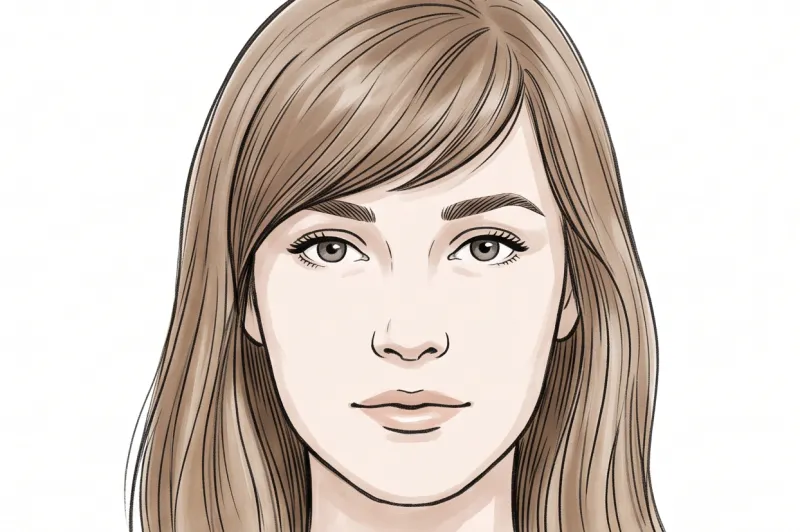
The most common rejection cause for people with bangs is the hair hanging too low, casting a shadow over the eye sockets. This darkening effect interferes with red-eye reduction and prevents the biometric software from accurately mapping the distance between your facial features. In practice, even if the eye itself is technically visible, having hair resting too close to the lash line often triggers a rejection due to this exact lighting interference.
If you have a long fringe that naturally falls forward, you must secure it before taking your picture. Use styling products or a non-visible bobby pin to firmly sweep the hair to the side. This guarantees full facial visibility and prevents any accidental shadows from ruining an otherwise perfect shot.
Get your document photo in 2 minutes
Upload a normal selfie and receive a compliant document photo that meets the official technical requirements for your country and document — ready to print or submit online.
Make my photoVoluminous Hair and Afros: How Does It Affect Photo Size?
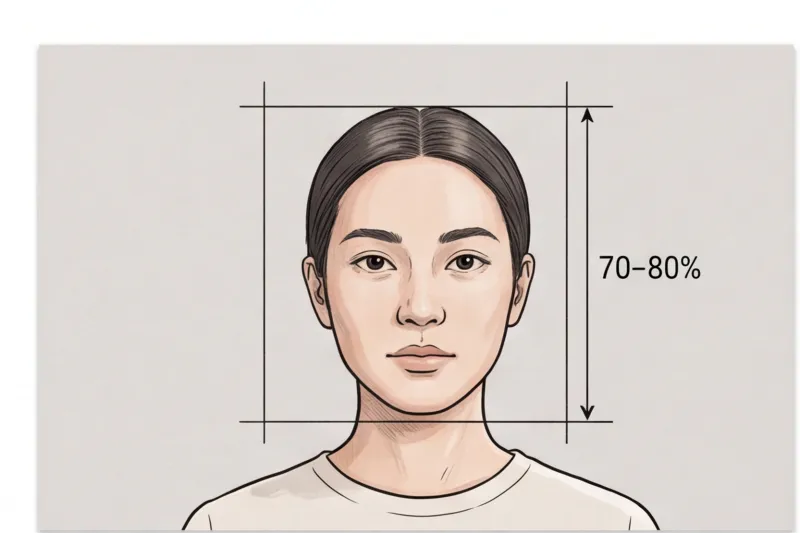
When sizing a passport photo with voluminous hair, the strict biometric rule focuses entirely on the face, not the total hair volume. The face itself — measured precisely from the bottom of the chin to the anatomical crown of the head — must meet the country's specific head-height ratio, which typically occupies 70–80% of the overall frame height.
Because official standards prioritize facial mapping over hairstyles, it is completely acceptable if the top or sides of voluminous hair, such as an afro, large curls, or high updos, are cropped out of the final print or digital file. Authorities are scanning the fixed geometry of your eyes, nose, and chin, meaning the outer boundary of your hair does not need to be fully visible within the image margins.
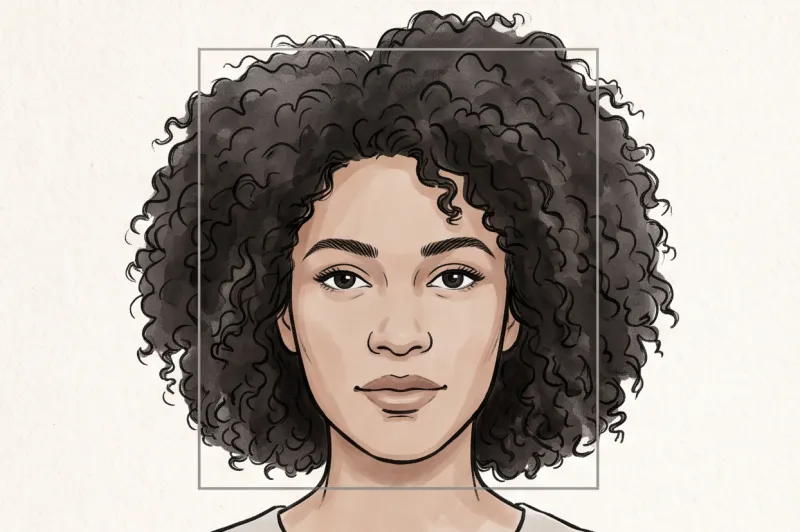
In practice, the most frequent mistake people make when taking a photo with a large hairstyle is zooming out too far. You must not shrink the face just to fit all of your hair into the photo. If you reduce the scale to include your entire hairstyle, the face will fall below the required head-height ratio, resulting in an automatic rejection for being too small in the frame.
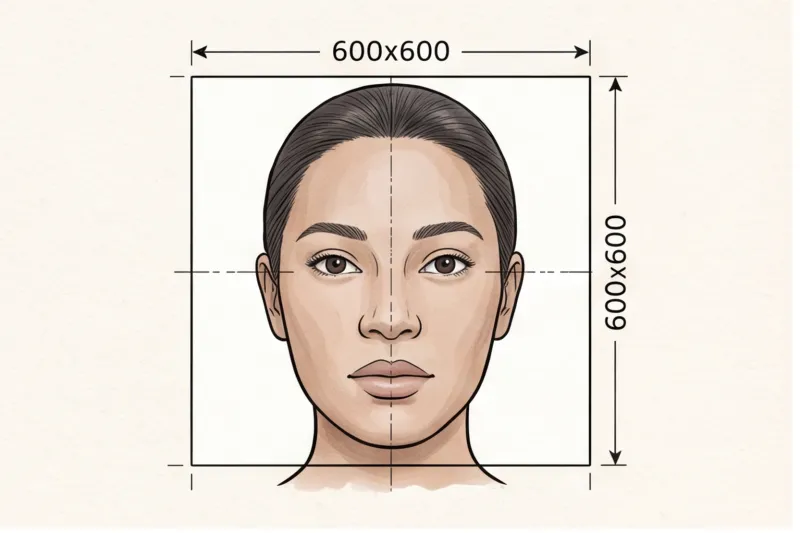
When measuring, the "crown" refers to the actual top of your skull beneath the hair. Estimating this point correctly is critical for accurate cropping. Since precise head-to-frame proportions and millimeter dimensions vary globally, you should verify the exact measurements for your specific document. You can find these exact specifications and correctly format your image through the country hubs in the PhotoID24 catalog, ensuring your face is perfectly scaled regardless of your hair's volume.
Does Facial Hair or a New Beard Matter for Passport Photos?
Beards, mustaches, and other forms of facial hair are fully permitted in passport photos, provided they are part of your everyday appearance. You do not need to shave specifically for your official documents.
Biometric mapping software identifies you using fixed facial geometry — such as the exact distance between your eyes, the shape of your nose, and your jawline structure. Because these fixed points remain unchanged beneath your facial hair, minor trims or a few days of stubble will not invalidate your photo or cause a rejection.
However, the universal biometric standard requires your photo to be taken within the last 6 months so it accurately reflects your current look. This '6-month rule' is critical if you undergo a drastic transformation. If you have grown a substantial, thick beard or completely shaved off a heavy, long beard since your current passport was issued, your visual identity has significantly changed. In practice, arriving at a border checkpoint with a drastically different facial appearance than your document photo can cause automated scanner delays or require manual verification by an officer. If your look has permanently changed, it is safest to update your photo.
Ready to prepare your document photo?
Skip the studio. Upload a selfie and get a professionally prepared photo that meets the official technical requirements in about two minutes.
Get startedHair Accessories, Hats, and Head Coverings
Decorative hair accessories, hats, and fashion head coverings are banned in biometric document photos because they disrupt the required mapping of your head shape. If you need to tie your hair back to keep it off your face, use only a plain, discrete elastic band that remains invisible from the front.
In practice, a frequent cause of rejection is the use of items like large bows, bulky clips, thick headbands, or scrunchies. Biometric scanners rely on a clean outline of your head against a plain, light background; prominent accessories alter this silhouette and violate the neutral background requirement. Similarly, hats, baseball caps, beanies, and fashion headscarves are universally prohibited across all document types.
The sole exception to the head-covering ban applies to items worn daily for religious or medical reasons. Authorities such as the U.S. Department of State and the UK's GOV.UK standardly permit these exceptions, provided strict facial visibility rules are maintained. If you wear a religious or medical head covering, you must ensure that:
- The full face is visible: Your features must be completely clear from the bottom of your chin to the top of your forehead.
- No shadows are cast: The fabric must be positioned so that it does not drape over the cheekbones or cast dark shadows across your skin or eyes under the camera's even lighting.
Be aware that some countries require supporting documentation — such as a signed religious statement or a medical certificate — to accompany your application when utilizing this exception. Always check the official guidelines of your issuing authority to confirm their specific documentary requirements.
What Will Get a Passport Photo Rejected? (Hair & Face Checklist)
A passport photo will be rejected if your hair covers your eyes, obscures the oval outline of your face, or casts shadows on your skin, because biometric software cannot map incomplete facial geometry. In practice, incorrect hair placement and expression mistakes are among the most frequent reasons a submitted photo fails official technical checks.
To ensure your photo meets the official technical requirements, review this core biometric checklist before taking your picture:
- Hair obscuring eyes and creating shadows: Even a single thick strand of hair crossing your eye, or a heavy fringe casting shadows over your eye sockets, will interfere with facial recognition algorithms. Both eyes must be fully visible.
- Breaking the facial outline: Hair draped forward over your cheeks or jawline breaks the visible oval shape of your face. Biometric scanners must detect the full edge of your face from the bottom of the chin to the top of the forehead.
- Prohibited accessories: Headphones (including small wireless earbuds) or prominent jewelry entangled in your hair are strictly banned. They alter your silhouette and will cause an immediate rejection.
- Incorrect expressions: Regardless of how perfectly your hair is styled, non-neutral expressions will fail the biometric scan. Smiling, frowning, leaving your mouth open, or having closed eyes are universal rejection triggers.
Get your document photo in 2 minutes
Upload a normal selfie and receive a compliant document photo that meets the official technical requirements for your country and document — ready to print or submit online.
Make my photoWhat Are the Passport Photo Requirements for Makeup?
Makeup in a passport photo must remain natural and not drastically alter your everyday appearance. Just as intrusive hairstyles can hide your features, heavy contouring that artificially changes your face shape will cause a rejection.
When preparing for your photo, keep your cosmetic application minimal. Avoid heavy eyeliner that alters the apparent shape or size of your eyes. Your skin tone must look natural in the final image, meaning you should skip extreme artificial tanning, thick foundations, or lightening products that misrepresent your true complexion.
Additionally, the even lighting required for biometric photos can interact poorly with certain products. High-gloss lipsticks, metallic eyeshadows, and heavy highlighters often create bright white glare and reflections on your face under studio or flash lighting. To prevent lighting-related rejections, stick to matte finishes that allow the camera to capture your exact features without disruptive shiny patches.
How to Take a Passport Photo at Home (With the Right Hairstyle)
To take a compliant passport photo at home with your everyday hairstyle, position yourself in front of a plain, light background under even lighting, tuck your hair behind your ears to keep the facial oval fully visible, and capture the image straight-on. Getting these physical basics right is the most effective way to prevent the most common DIY rejection causes: harsh shadows and obscured facial features.
The physical environment and lighting setup dictate the technical success of your shot. Stand facing a plain, light, uniform background — typically white or light grey, depending on the specific country's rules. The biggest hurdle when shooting at home with voluminous, long, or heavily styled hair is avoiding shadows. If your main light source comes from an angle or directly above, your hair will inevitably cast dark shadows across your cheeks, your forehead, or onto the background behind you. To prevent this, stand directly facing a window that offers natural, diffuse daylight, ensuring the light illuminates your face evenly from the front.
Once your lighting is balanced, focus on your posture and hair placement. Tuck your hair securely behind your ears. This straightforward action instantly clears the hair from the sides of your face, allowing biometric scanners to map the exact width of your facial geometry without obstruction. Square your shoulders to the camera, keep your head completely level without any tilt, and look directly into the camera lens. You must maintain a completely neutral expression throughout the process. Keep your mouth closed and avoid smiling, as an altered facial expression shifts the fixed distances between your eyes, nose, and mouth, breaking biometric mapping rules.
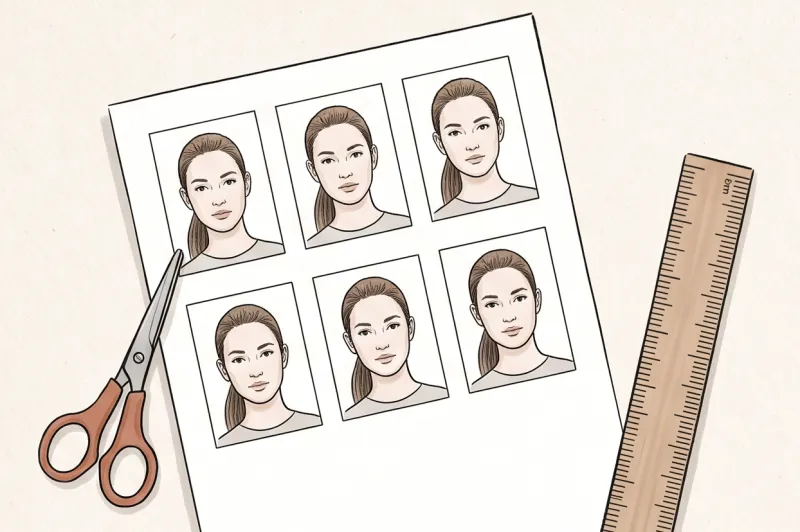
Capturing a well-lit image is only half the battle; formatting the file correctly is where many applicants face rejection. The required dimensions and strict head-to-image ratios differ vastly across the globe. Instead of struggling with complex sizing — such as trying to figure out how to manually crop a 2x2 inch (51x51 mm) photo for a United States passport or calculating the precise head height for a 35x45 mm photo for a European document — use a professional service. Manual editing at home frequently leads to critical sizing errors when dealing with large hairstyles. A typical mistake is zooming out to fit every last strand of hair into the frame. This inadvertently shrinks the actual face below the mandatory height requirement (commonly 70–80% of the total frame), resulting in an automatic rejection. It is completely acceptable for the outer edges of voluminous hair to be cropped out, provided the facial dimensions are strictly accurate.
By using PhotoID24, you bypass all the formatting guesswork. You can simply upload a normal selfie taken with your smartphone. The service automatically checks your photo against the official technical requirements of your selected country, ensures your head size is correctly proportioned regardless of your hair volume, and crops the image with pinpoint accuracy. It delivers a fully compliant digital file in minutes, ready for printing or online submission.
Your actionable step today is simple: brush your hair back to reveal your full face outline, step in front of a bright window, and take a clear, straight-on selfie. Let a professional platform handle the rigid biometric geometry and specific country sizing, guaranteeing your application moves forward smoothly without unnecessary photo delays.