Can I Have a Beard in My Passport Photo?
Many applicants worry that their grooming choices will cause their application to be rejected. The direct answer is yes: you can have a beard, mustache, or any style of facial hair in your passport photo.
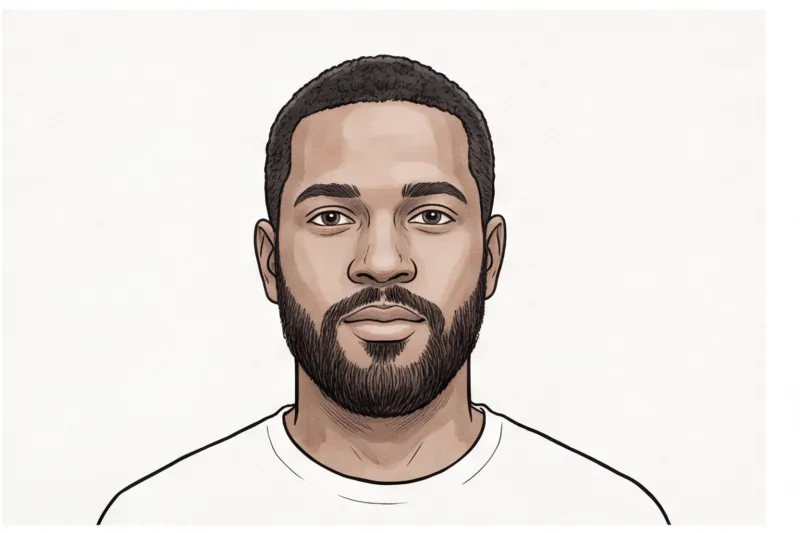
Under the international principles set out in ICAO Doc 9303 — the biometric standard guiding most global travel documents — facial hair is universally accepted. A beard is perfectly fine provided it does not obscure your eyes, cover the fundamental outline of your face, or alter your core facial geometry. In practice, biometric scanners map fixed anchor points like the distance between your pupils and the bridge of your nose, which facial hair does not hide.
The primary regulation to remember is the universal "recent photo" rule. Major authorities globally require your picture to reflect your current, everyday appearance and to be taken within the last 6 months. Therefore, if you currently have a beard, you should photograph with it rather than shaving specifically for the camera. Altering your daily look just for a document application is unnecessary. We cover the full technical rules for document photography in our complete guide.
How Biometric Scanners Process Facial Hair
Modern passport and ID photos are processed as biometric data, not just standard visual portraits. When an immigration officer or automated e-gate scans your passport, the system does not look at your beard; it reads the underlying bone structure of your face. Because facial hair only sits on the skin, it does not alter your core facial geometry.
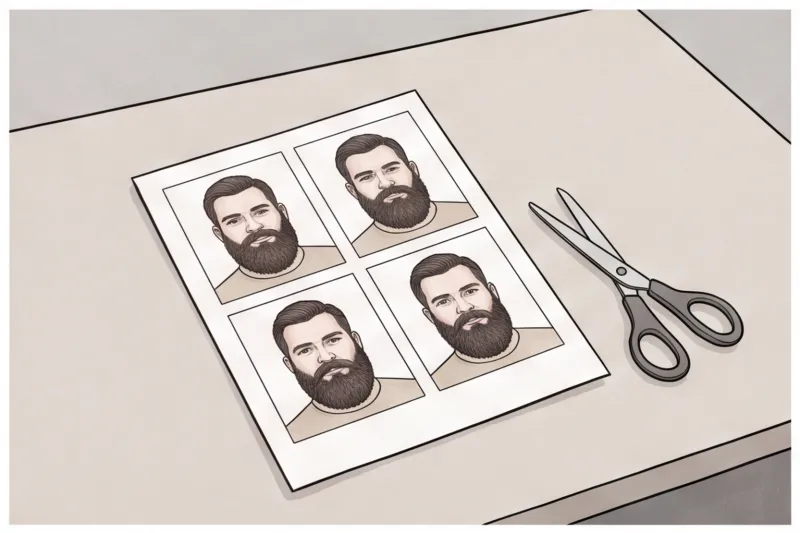
Biometric software maps your identity by measuring specific, unchangeable anchor points. It calculates the exact distance between your pupils, the spatial depth of your eyes, the width of the bridge of your nose, and the position of the outer corners of your mouth. As long as these core markers are visible, the verification software functions perfectly. If you are curious about how these technical standards apply worldwide, we cover the full specifications in our complete guide to global passport photo requirements.
Understanding this biometric mapping explains exactly why the neutral expression rule is so strictly enforced across ICAO-aligned countries. Your mouth must be closed with no smile to keep the anchor points around your lips and cheeks in their natural resting positions. A smile physically moves your facial muscles, shifting the geometry and triggering a biometric mismatch. Therefore, biometric verification works flawlessly regardless of how much facial hair you have — provided you maintain a completely neutral expression and your mustache does not entirely hide the resting line of your mouth.
Get your document photo in 2 minutes
Upload a normal selfie and receive a compliant document photo that meets the official technical requirements for your country and document — ready to print or submit online.
Make my photoVoluminous Beards and the Head Measurement Rule
Having a long or thick beard introduces a specific cropping challenge for passport photos: getting the head size measurement right. Official guidelines require the face to fill a precise percentage of the frame, and this measurement is strictly based on your actual facial structure, not the overall length of your beard.
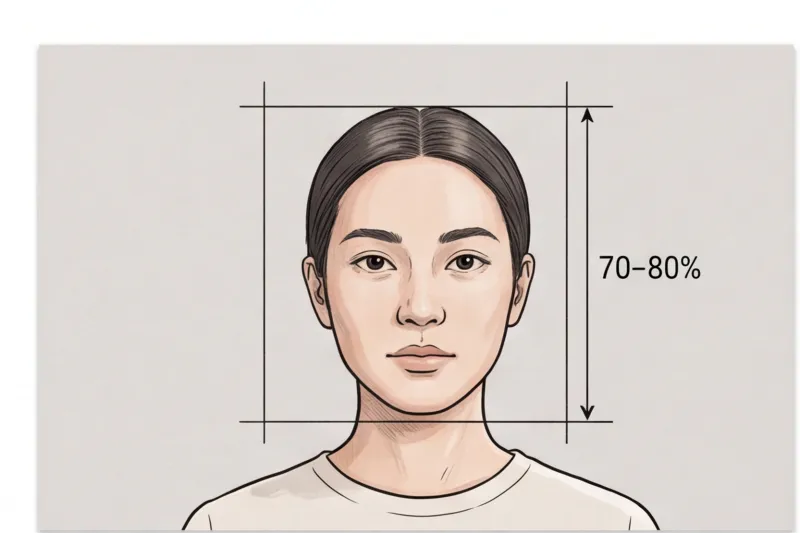
Under most global standards, including general ICAO guidelines, your face must fill roughly 70–80% of the overall frame height. While exact dimensions and head-height ratios vary by country (for example, the United States requires a 2 × 2 inch photo, whereas most European countries use 35 × 45 mm), the core requirement is consistent. The authorities need your face to be prominent and correctly proportioned for biometric scanning.
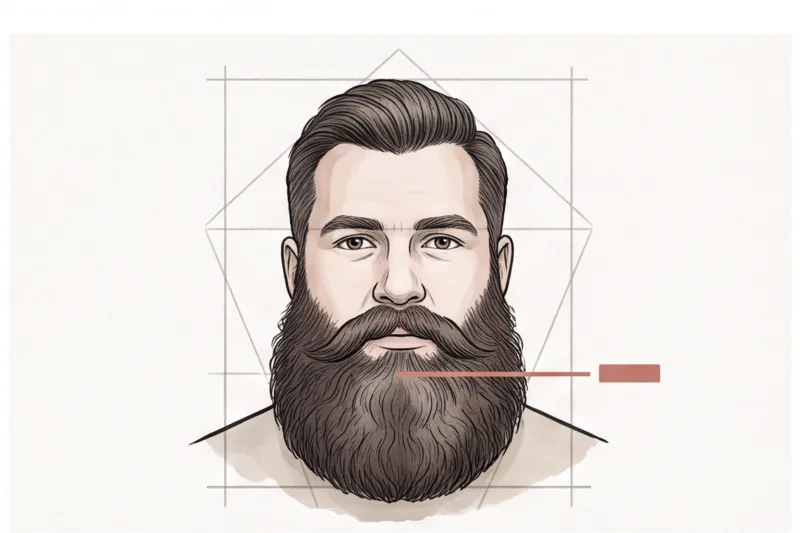
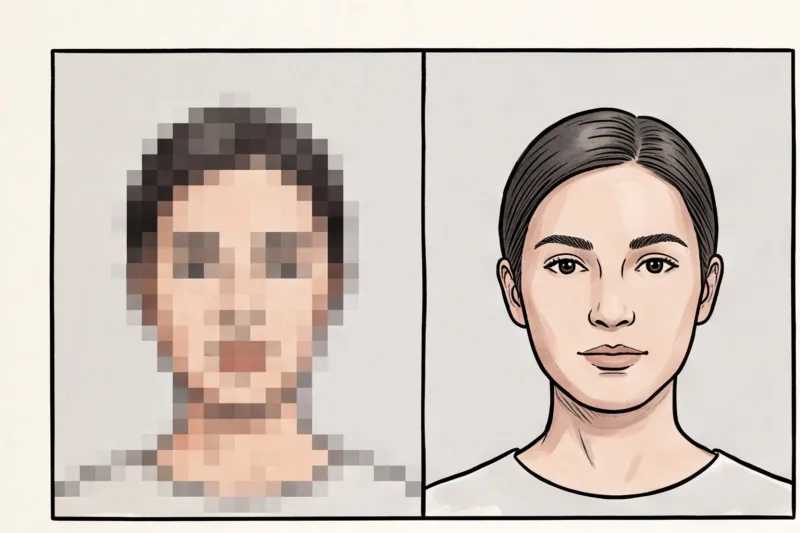
In practice, the most frequent reason a photo with a voluminous beard is rejected is incorrect scaling. When preparing a picture, many people naturally try to fit their entire beard inside the frame. However, shrinking the overall image to include a chest-length beard causes the actual head to become far too small. If your head falls below the strict minimum height requirement, the biometric software cannot accurately map your features, and the application will fail.
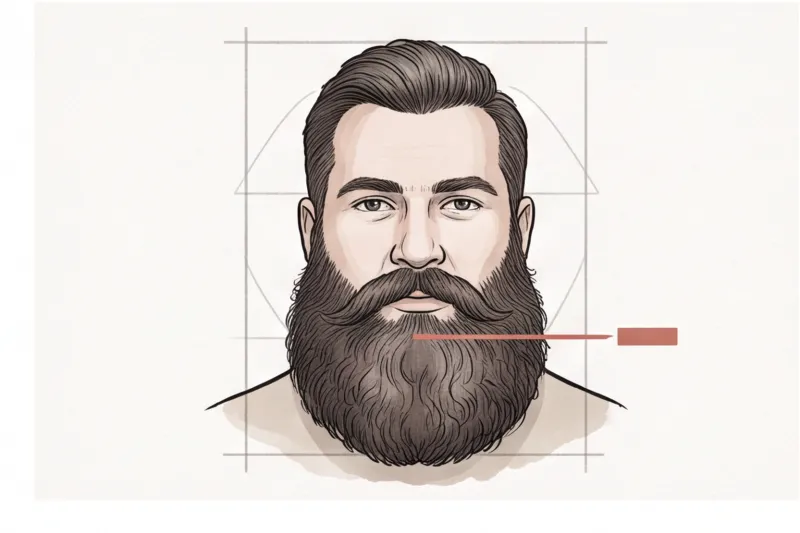
The crucial distinction is how authorities measure your face. The head height is calculated from the crown of your head (ignoring hair volume) down to your actual chin — meaning the bone structure of your jaw. The bottom of your beard does not count toward this measurement. Because of this, it is entirely acceptable, and usually necessary, for the lower portion of a long beard to be cropped out of the final picture. As long as your core facial geometry is the correct size relative to the photo boundaries, a truncated beard will not cause a rejection.
What if I Grow or Shave My Beard After Getting a Passport?
Growing a beard or shaving it off entirely does not invalidate your current, unexpired passport. You do not need to apply for a new travel document or take a new beard passport photo just because you changed your facial hair.
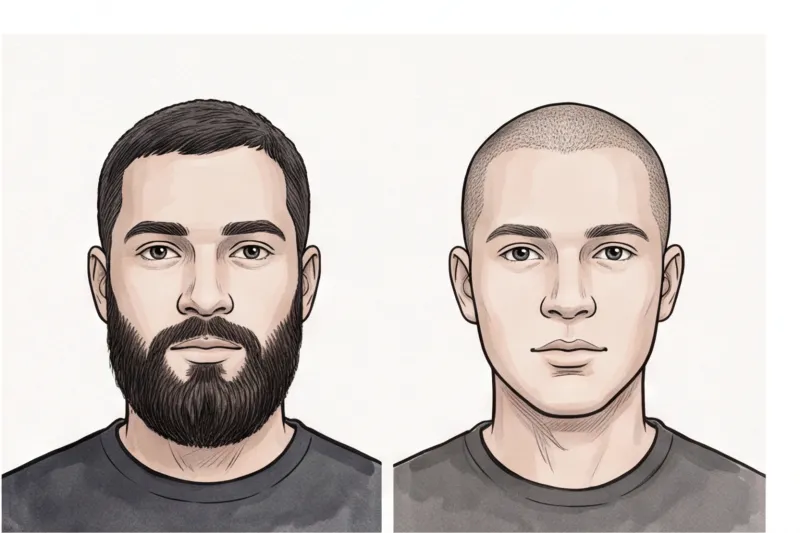
Adult passports are typically valid for 10 years in many countries, including the United States, the UK, and across the EU. It is completely natural to experience anxiety that arriving at a border checkpoint looking vastly different from your original photo might cause delays. However, temporary cosmetic changes in facial hair are entirely expected and permitted during your document's lifespan.
When you travel, border agents and automated e-gates rely on unchangeable biometric data alongside standard visual checks. As defined by international standards like ICAO Doc 9303, the fixed geometry of your face — such as the distance between your eyes, the bridge of your nose, and your core bone structure — remains constant. Because facial hair does not alter this underlying biometric data, scanners and trained officers will successfully match your current face to the chip in your passport, regardless of whether you are bearded or clean-shaven today.
According to official authorities like the U.S. Department of State and the UK's HM Passport Office, you only need to apply for a new passport if your face has undergone significant surgical alteration or severe facial trauma that fundamentally changes your bone structure. Routine cosmetic adjustments do not trigger this requirement. Your current passport remains completely valid for travel.
Ready to prepare your document photo?
Skip the studio. Upload a selfie and get a professionally prepared photo that meets the official technical requirements in about two minutes.
Get startedWhat Will Get a Passport Photo Rejected? (Beard-Specific Risks)
A passport photo will be rejected if facial hair creates dark shadows, completely obscures the mouth, or if the image violates general biometric rules such as smiling, wearing glasses, or having a patterned background. While having a beard is universally permitted, its volume can trigger specific technical failures during the shoot.
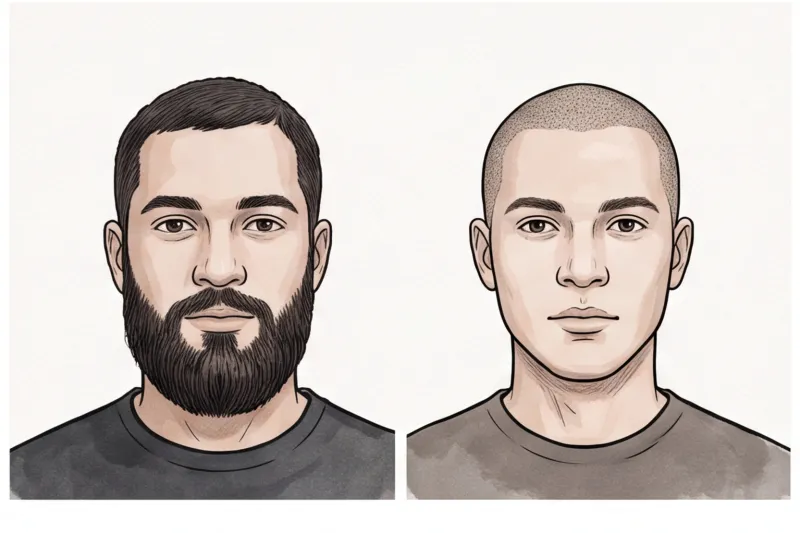
In practice, the most common beard-related rejection is caused by uneven lighting. Thick, voluminous beards easily block light from reaching the lower face and neck. If you take your photo directly under standard overhead room lighting, the beard will cast a dense, harsh shadow across your collar or onto the backdrop immediately below your chin. Biometric standards strictly require even illumination without any visible shadows on the subject or the background. To prevent this, always ensure strong frontal lighting — such as standing directly facing a window — to illuminate the space under the beard.
Another frequent issue is an obscured expression. The official requirement states you must maintain a neutral expression with your mouth closed. If an unkempt mustache or beard completely hides your lips, the reviewing officer cannot definitively verify that you are not smiling. You must ensure the actual line of your mouth is at least partially visible so authorities can confirm a neutral state.
Beyond facial hair, ensure you do not fall victim to the most standard global rejection causes:
- Non-neutral expressions: Smiling, frowning, or having your mouth open will instantly fail the biometric check.
- Wearing glasses: Glasses are increasingly banned for official travel documents. Both the United States and the United Kingdom now completely prohibit them in passport photos, except for rare, documented medical exceptions. Always remove them.
- Incorrect backgrounds: The background must be plain, light, and uniform (typically white or light grey). Textured walls, visible patterns, or objects in the frame will result in an immediate denial.
What Are the Rules for a Passport Picture?
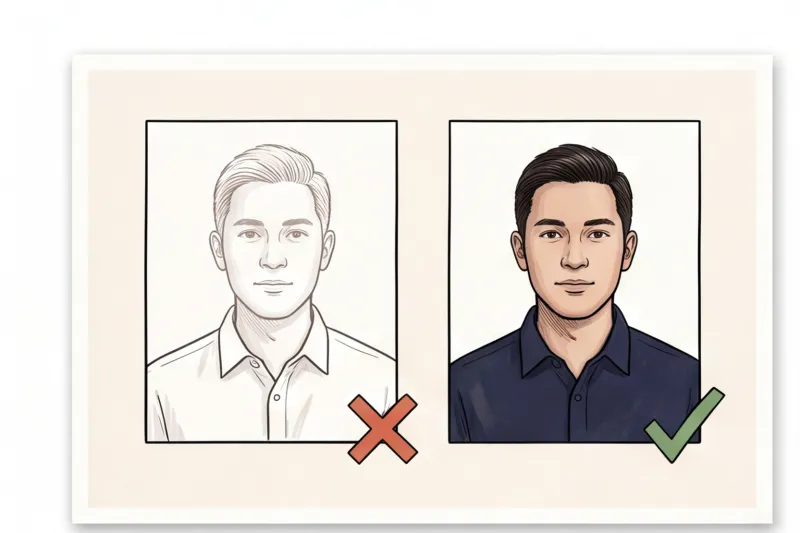
The core rules for any passport picture require you to face the camera directly with a neutral expression, ensure both eyes are fully visible, and stand against a plain, light background. These biometric standards guarantee that your face can be accurately mapped by verification software, regardless of your personal grooming choices.
In practice, this means looking straight at the lens with your shoulders square, your mouth closed, and no smile. The background must be uniform — typically white or light grey depending on the country — with no patterns, harsh shadows behind the head, or objects in the frame. For a comprehensive breakdown of how these principles apply to specific national documents, see our Passport Photo Requirements: The Complete Global Guide.
A frequent question applicants ask alongside facial hair rules is: what are the passport photo requirements for makeup? You are allowed to wear everyday cosmetics, provided they do not alter your natural facial structure. Heavy contouring that changes the apparent shape of your cheekbones, nose, or jawline can cause a biometric scanner mismatch and lead to a rejected application. Just like a natural beard, makeup must simply reflect how you look on a normal day.
Crucially, you cannot use any filters, digital beautification, or heavy retouching on your image. While it is acceptable if a minor, temporary blemish is not visible, altering your core features, modifying your natural skin tone, or applying app-based beauty filters strictly violates international document guidelines. The final photo must remain a highly accurate, unedited representation of your current appearance.
Get your document photo in 2 minutes
Upload a normal selfie and receive a compliant document photo that meets the official technical requirements for your country and document — ready to print or submit online.
Make my photoHow Do I Make a 2x2 Photo for My Passport at Home?
To make a 2x2 photo for your passport at home, position yourself facing a window for even natural lighting, capture a clear picture with your smartphone, and use a professional formatting service rather than attempting the strict biometric cropping yourself. While the 2 × 2 inch (51 × 51 mm) format is standard for United States travel documents, manual resizing often leads to rejection — especially when facial hair obscures the required measurement points.
When taking your beard passport photo at home, your primary focus should be lighting. Stand directly facing a window during daylight hours. This front-lit setup ensures the light falls evenly across your face and, crucially, illuminates the area directly under your beard. In practice, a frequent reason home photos fail is overhead room lighting casting deep, dark shadows on the neck or the background behind the head. Natural, direct window light eliminates these shadows, providing the even exposure that official guidelines demand.
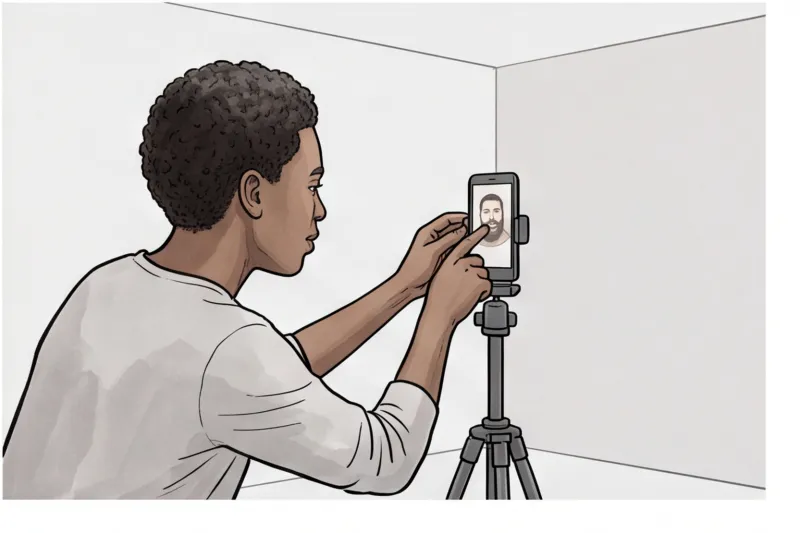
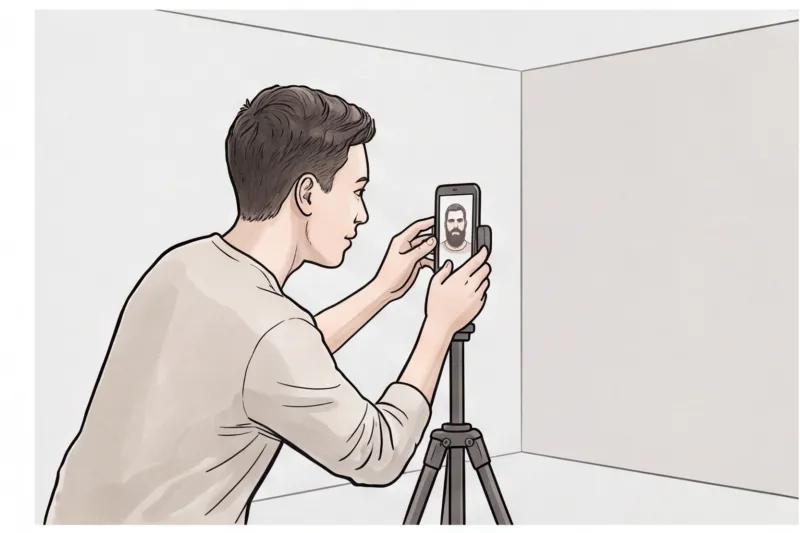
For the best results, do not hold the phone yourself. A close-up selfie uses the camera's wide-angle lens, which distorts your core facial geometry and can alter the distance between your eyes. Instead, have a friend hold the camera or set up a tripod roughly 4 to 6 feet away. Keep your shoulders square, head level, and look directly at the camera lens with a neutral expression.
Once you have a well-lit image, do not worry about executing the exact 2 × 2 inch crop or calculating the precise 70–80% chin-to-crown measurement yourself. Attempting this manually is a common pitfall. Because a voluminous beard hides the actual structural line of your chin, guessing where the head measurement should end frequently results in a face that is too small in the final frame. Furthermore, keep in mind that there is no single global photo size; while the US uses 2 × 2 inches, many European and international documents require a 35 × 45 mm format with completely different head-height ratios.
Instead of struggling with photo editing software, you can guarantee compliance by using our service, PhotoID24. The process is designed to remove the guesswork from complex biometric rules. Simply upload your smartphone selfie. In minutes, the professional service automatically maps your facial geometry to locate your actual chin beneath the beard, perfectly aligns your eyes, ensures the background is uniformly light and plain, and formats the image to the exact official technical requirements of your selected country.
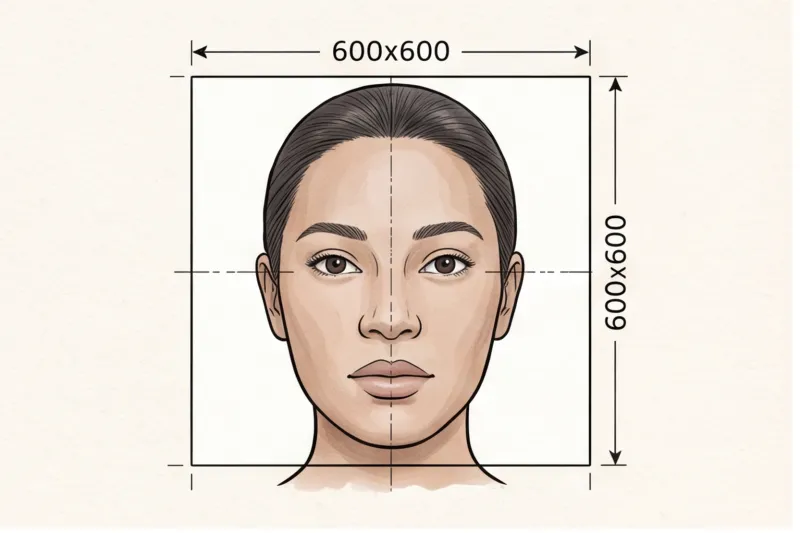
Whether your application requires a precisely sized digital file (like the US requirement of 600 × 600 pixels minimum for online submission) or a physical print, the system handles the technical specifications automatically. PhotoID24 provides a ready-to-use digital download and, where offered, physical delivery of correctly formatted printed sheets. You skip the stress of manual cropping and get a professional result ready for submission. Your immediate next step is simple: find a bright window, capture your updated look, and let our service handle the complex biometric measurements today.